
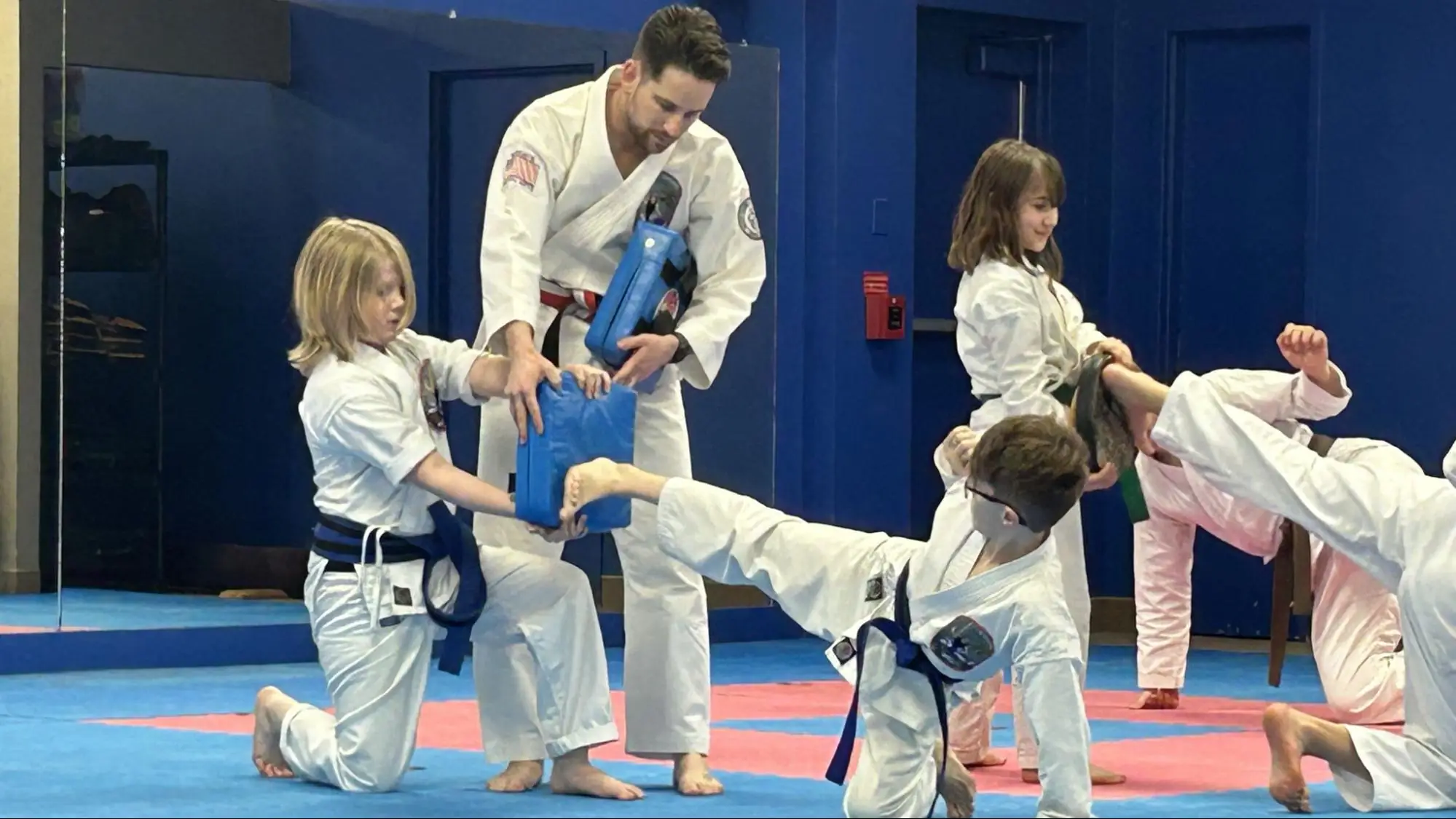
Ensuring our children have real tools to navigate the world safely is every parent's top priority. Finding practical self-defense for children means looking far beyond sports trophies, colorful belts, and acrobatic choreography.
According to national school safety data from the National Center for Education Statistics, nearly 20 percent of students between the ages of 12 and 18 encounter physical intimidation, peer harassment, or altercations during the school year.
For families living in Northwest Greece, Greece West, Hilton, Parma, and Irondequoit, preparing a child for unpredictable social environments is not about teaching them to fight.
It is about instilling quiet confidence, sharp spatial judgment, and physical habits that help them avoid danger long before contact ever occurs.
At Murray’s Martial Arts, we teach children that physical action is always the absolute last resort.
By mastering traditional Isshin-Ryu Karate mechanics and situational awareness, young students develop the mental clarity to make smart, protective decisions under pressure.
Practical Mechanics vs. A False Sense of Security
Many after-school activities teach children how to kick foam targets or perform scripted routines that look exciting in demonstrations.
While these exercises build general physical fitness, they can accidentally give a child a false sense of security in a real-world encounter.
Pushing or kicking the air does not prepare a young person for what it feels like when someone aggressively grabs their jacket sleeve or corners them in a hallway.
In a real physical confrontation, a smaller child cannot rely on brute force to overpower an older, taller, or heavier aggressor. Real safety relies on leverage, physics, and understanding anatomical weak points.
When children learn how balance works, how to use leverage, and how to create immediate distance, they gain genuine competence.
This deep technical understanding removes the panic response, allowing kids to stay calm, evaluate their options, and escape safely to a trusted adult.
The 5 A's of Personal Safety: The Mindset Behind Prevention
Before any physical technique is ever executed, our instructors teach the 5 A's of Self-Defense.
This comprehensive framework ensures that children prioritize prevention, mental alertness, and smart decision-making at every stage of an encounter.
1. Assessment
Assessment is the ability to evaluate an environment before stepping into it.
Children learn to recognize potential risks, such as poorly lit walkways, isolated playground corners, or groups of peers engaging in disruptive behavior.
By assessing their surroundings continuously, young people learn to make proactive choices about where to walk and who to stay near.
2. Awareness
Awareness means staying fully present in the moment rather than walking with eyes glued to a mobile screen or wandering in a daydream.
We train students to use their senses, noticing subtle changes in body language, tone of voice, or unexpected movements around them.
Heightened awareness gives a child valuable time to react before a situation escalates.
3. Avoidance
Avoidance is the golden rule of martial arts.
If a child notices a potential conflict or feels uncomfortable in a situation, the most successful response is simply to leave.
Walking away, crossing the street, or moving toward a crowd of people is never a sign of weakness; it is the ultimate expression of wisdom and self-control.
4. Action
When avoidance is no longer an option because a child is physically cornered or grabbed, immediate action becomes necessary.
Action involves utilizing a strong, vocal command to establish a boundary or executing a fast, leverage-based physical escape to break free.
5. Aftermath
The situation does not end the moment a child escapes physical contact.
The final step is managing the aftermath, which means running directly to a trusted adult, reporting the exact details of what occurred, and receiving emotional support.
Children learn that telling a parent, teacher, or authority figure is an essential step in keeping themselves and others safe.
5 Essential Physical Skills Every Child Must Master
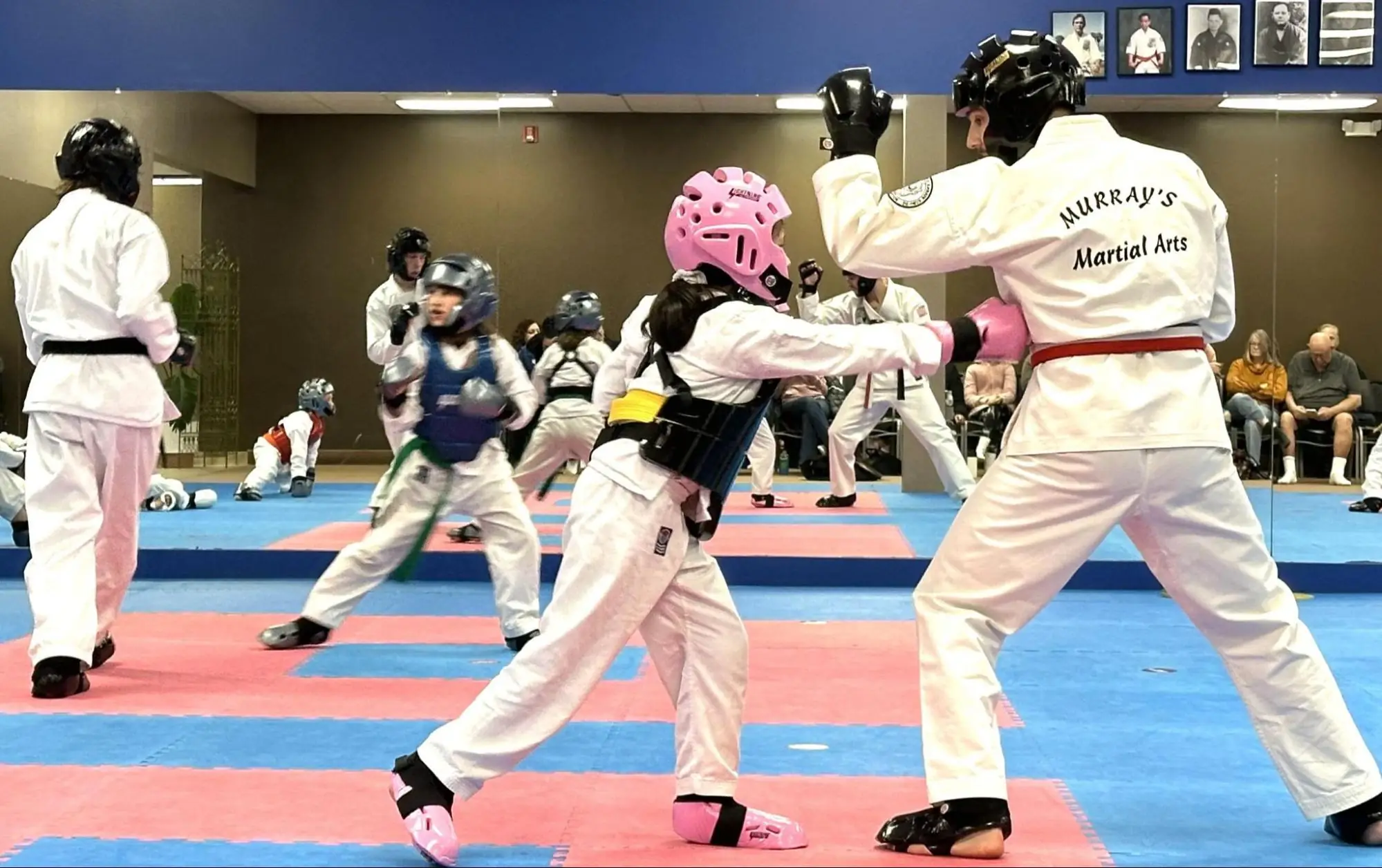
As parents, we hope our children never have to face physical aggression. However, when a situation escalates unexpectedly and physical contact becomes unavoidable, a child cannot afford to freeze.
Under intense stress, fine motor skills fade, and panic sets in. That is why children need simple, leverage-based mechanical responses that rely on muscle memory rather than strength.
At Murray's Martial Arts, we train these five core physical skills until they become second nature, giving kids the exact tools they need to break free and get to safety.
1. Escaping Wrist Grabs
Wrist grabs are one of the most common ways an aggressor attempts to pull, isolate, or control a child on a playground or in a public setting.
When an untrained child feels their wrist grabbed, their immediate instinct is to pull directly backward against the aggressor's fingers.
This creates a strength-on-strength battle that a younger child will almost always lose, causing them to panic as they feel trapped.
Breaking the Grip via the Thumb Gap
In our classes, we re-wire this instinct by teaching kids to leverage the physics of the human hand.
An attacker's grip is only as strong as their thumb. Where the fingers meet the thumb, there is a natural structural opening.
Instead of pulling backward, the child rotates their forearm directly toward that thumb gap, drops their center of gravity, and bends their elbow inward toward their own chest.
By pulling their elbow to their body while driving through the thumb opening, even a small child breaks the hold effortlessly and creates an immediate opportunity to sprint away.
2. Escaping Upper-Body Grabs Through Leverage
Upper-body grabs are terrifying for children because they restrict movement and disrupt balance.
When an untrained child is grabbed forcefully by an aggressor, their natural reaction is to panic, pull away, or try prying an aggressor's hands off using raw muscle.
Against a larger or heavier peer, this strength-on-strength struggle quickly drains a young person's energy and leaves them vulnerable to being pulled off their feet.
Shifting Body Leverage to Slide Free
At Murray’s Martial Arts, we teach children to address the leverage point of an aggressor's body rather than fighting the grip itself.
By learning how to drop their center of gravity, adjust their stance, and shift their body angles, students understand that positioning and physics will always overcome brute force.
Beginners between ages 4 and 15 first master foundational balance, spatial awareness, and vocal boundaries. As students advance in belt rank and build physical control, our youth curriculum introduces more advanced skills.
Over time, children systematically learn to apply these leverage principles against more difficult attacks and complex holds in a safe, controlled setting.
3. Defending Against Playground Shoves
Playground aggression and physical bullying almost always begin with a sudden push or shove.
Aggressors use this tactic to test vulnerability, throw the victim off balance, or drive them onto hard pavement.
A child who falls backward risks head injuries and ends up in a highly vulnerable position on the ground.
Resetting into a Grounded Defensive Stance
To counter this, our students practice an immediate physical reset known as the defensive stance.
The second a child feels forward momentum or sees a sudden push coming, they bend their knees, drop their weight, and step one foot backward to widen their base.
This simple adjustment absorbs the impact, keeping them firmly on their feet. Simultaneously, the child raises both hands to chest height with open palms facing outward.
This creates a physical barrier to protect their face while clearly signaling to onlookers and teachers that they are trying to stop the confrontation.
4. Ground Defense
Ending up on the ground during a physical struggle is one of the most dangerous scenarios a child can face.
On the ground, an aggressor can pin a child down or strike from above. Trying to stand up the way one normally would off the living room floor leaves the face, head, and torso completely defenseless.
Executing the Tactical Stand-Up
Our students master a specialized technique called the "Tactical Stand-Up." If knocked down, the child immediately turns their hips toward the threat, using flexible leg movements to keep the aggressor from stepping closer.
They place one hand firmly on the mat behind them and keep their opposite hand up in a high guard protecting their face.
By posting on that hand and the opposite foot, they lift their hips, sweep their bottom leg back underneath their center of balance, and rise directly into an upright defensive stance without ever exposing their head.
5. Managing Group Threats
Being confronted by multiple peers or surrounded in a crowded hallway creates immense psychological pressure.
An untrained child usually freezes in the center of the group, trying to look back and forth as aggressors move behind them.
Creating Escape Corridors with Angular Movement
We teach children that standing still against multiple threats is never an option. Students practice constant angular movement, learning to circle continuously so they never get pinned against walls, bleachers, or fences.
By keeping their body moving along the perimeter, the child ensures all individuals remain in their line of sight.
More importantly, this movement forces the aggressors to step in front of one another, creating temporary physical obstacles between them and opening up a clear escape corridor for the child to break through.
The Hidden Risks of Delayed Action: Why Early Safety Training Matters
When intimidation, peer hostility, or physical aggression is not detected and addressed early, the consequences for a child can be severe and long-lasting.
Children who experience ongoing harassment without a way to protect themselves often suffer deep emotional and physical tolls.
Emotional Trauma and Anxiety
Unaddressed aggression frequently leads to chronic anxiety, sudden mood shifts, and clinical depression. Children may internalize the fear, believing they are powerless.
Erosion of Adult Trust
When kids feel unsafe and believe adults cannot protect them every second of the day, they often stop confiding in parents or teachers, withdrawing into isolation.
Academic and Social Decline
Fear consumes mental energy. Children under constant social stress frequently miss school, experience falling grades, and withdraw from extracurricular activities.
Long-Term Behavioral Impact
Without constructive tools to handle stress, some young people develop unhealthy coping mechanisms, internalizing fear or exhibiting disruptive behaviors as a defense mechanism.
Equipping your child with practical safety skills is therefore more than just physical preparation; it is a vital form of early intervention.
Training provides kids with an internal shield, replacing fear with self-assurance and empowering them to build healthy boundaries for life.
How Parents Can Choose the Right Self-Defense Classes for Kids in Greece, NY and Parma
With various programs available throughout Monroe County, selecting the right training center for your family requires careful consideration.
The ideal school should align with your family's personal values, support your child's temperament, and prioritize personal growth over fighting.
What to Evaluate Before Enrolling
Instructor Qualifications and Teaching Style
Look for Senseis who specialize in youth development. Instructors should lead with patience, encouragement, and structured discipline rather than aggressive yelling or intimidation.
A Clean, Safe, and Modern Facility
Inspect the studio environment. Padded safety mats, sanitized equipment, and well-organized viewing areas reflect a school's commitment to student well-being.
Real-World Safety Focus
Ensure the curriculum teaches situational awareness, verbal boundary setting, and non-violent escapes rather than focusing purely on sport points or acrobatic tricks.
An Age-Appropriate Progressive Curriculum
Children learn best when matched with peers at their developmental level.
Unlike many local martial arts programs that blend 5-year-olds and 14-year-olds into the same crowded beginner class, Murray's Martial Arts maintains distinct, dedicated programs for early childhood (ages 4–6), elementary years (ages 7–9), and teens (ages 10–15).
This ensures instruction matches your child's cognitive, emotional, and physical maturity.
A Welcoming Family Environment: Observe how staff members greet students. A quality dojo feels like an extended family where every child is known by name and supported from day one.
Visiting local studios, observing a live class, or taking advantage of beginner introductory sessions allows parents to see firsthand how instructors interact with young learners before making a long-term commitment.
Age-Appropriate Development Across Our Local Communities
A four-year-old in Hilton processes physical directions differently than a twelve-year-old in Irondequoit.
To ensure safety instruction matches physical and cognitive maturity, training must be structured around specific developmental stages.
Foundation Years (Ages 4 to 6)
For our youngest students in Northwest Greece and Parma, training centers on fundamental body control, spatial judgment, and listening reflexes.
Through engaging movement games, children learn how to recognize their personal space bubble, follow multi-step directions on the first try, and speak up clearly when feeling uncomfortable.
Intermediate Growth (Ages 7 to 9)
As children enter elementary school, social dynamics become more complex. Training shifts toward building discipline, anti-bullying confidence, and technical focus.
Students practice verbal boundary setting, learn to step into balanced stances under mild pressure, and earn visible belt milestones that celebrate personal effort and commitment.
Leadership and Traditional Mastery (Ages 10 to 15)
Older children and teens dive into authentic Isshin-Ryu Karate, mastering traditional forms (kata), practical leverage-based escapes, and leadership skills.
White Belt marks the beginning of an accountable personal journey, where students learn how to manage peer pressure, resolve conflicts peacefully, and act as positive role models in their schools and neighborhoods.
The Lifelong Impact of Empowering Your Child
Teaching a child self-defense is ultimately about giving them a foundation of self-reliance that lasts long after they leave the training mat.
When young people across Greece West, Hilton, Parma, and Irondequoit know how to assess risks, project confidence through their posture, and handle unexpected physical boundaries, they move through life with quiet assurance.
They are less likely to yield to peer pressure, more comfortable speaking up in classrooms, and better prepared to navigate unfamiliar social situations.
If you are ready to explore how structured martial arts can support your child's personal growth, we invite your family to visit our studio. Meet our experienced Senseis, observe a session from our open viewing area, and experience the supportive community at Murray's Martial Arts.
Ready to see it for yourself?
EXPLORE OUR PROGRAMSFrequently Asked Questions
Keep Reading
How to Choose the Right Karate Dojo for Kids
A parent's guide to finding a safe, supportive dojo — what to look for in instructors, facilities, and long-term value.
Kids & ConfidenceSelf-Defense and Safety Skills for Preschoolers in Greece, NY
What real safety training looks like for ages 3 to 6 — boundaries, listening habits, and confidence, never combat.
Parent ResourcesEverything You Need to Know Before Your Child’s First Karate Self-Defense Class in Greece, NY
What to expect, how to prepare, and why the first class at Murray’s is built to make shy kids feel right at home.
Kids & ConfidenceHow Kids Karate Anti-Bullying Strategies Build Confidence in Greece, NY
Real bullying prevention starts with posture, voice, and emotional control — here is how Isshin-Ryu training builds all three.
Parent ResourcesFrom Shy to Social: How Martial Arts in Hilton Helps Introverted Kids Make Friends
How structured youth karate gives quiet, introverted children a safe way to build confidence, friendships, and social skills.
Parent ResourcesWhat Are the Main Physical and Mental Benefits of Karate for Children?
How traditional karate builds fitness, coordination, focus, and emotional self-control — and how our dojo keeps kids safe on the mat.
Parent ResourcesWhat Age Should Children Learn Self-Defense? Youth Karate in Rochester, NY
A parent's guide to readiness signs and what age-appropriate self-defense looks like from ages 4 to 15.